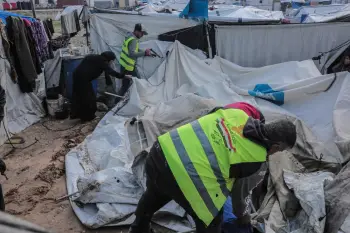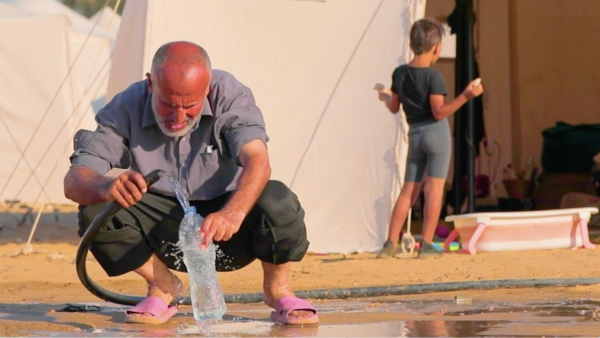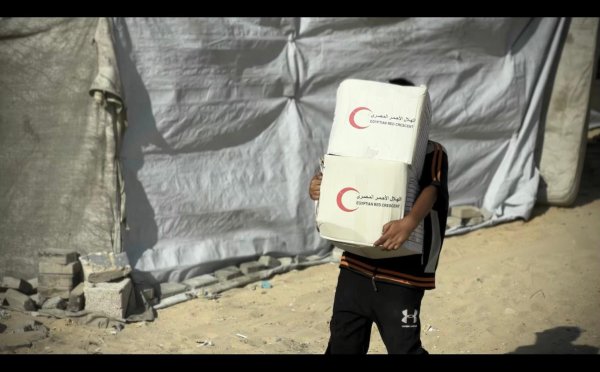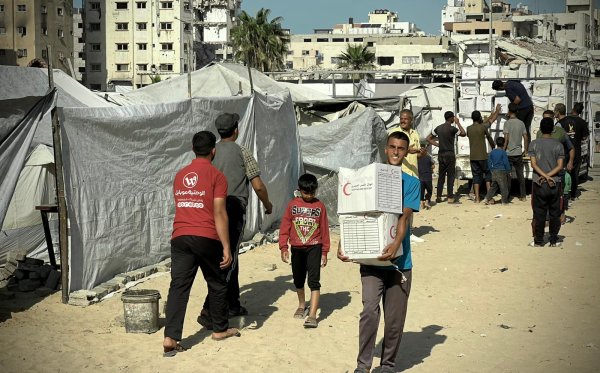
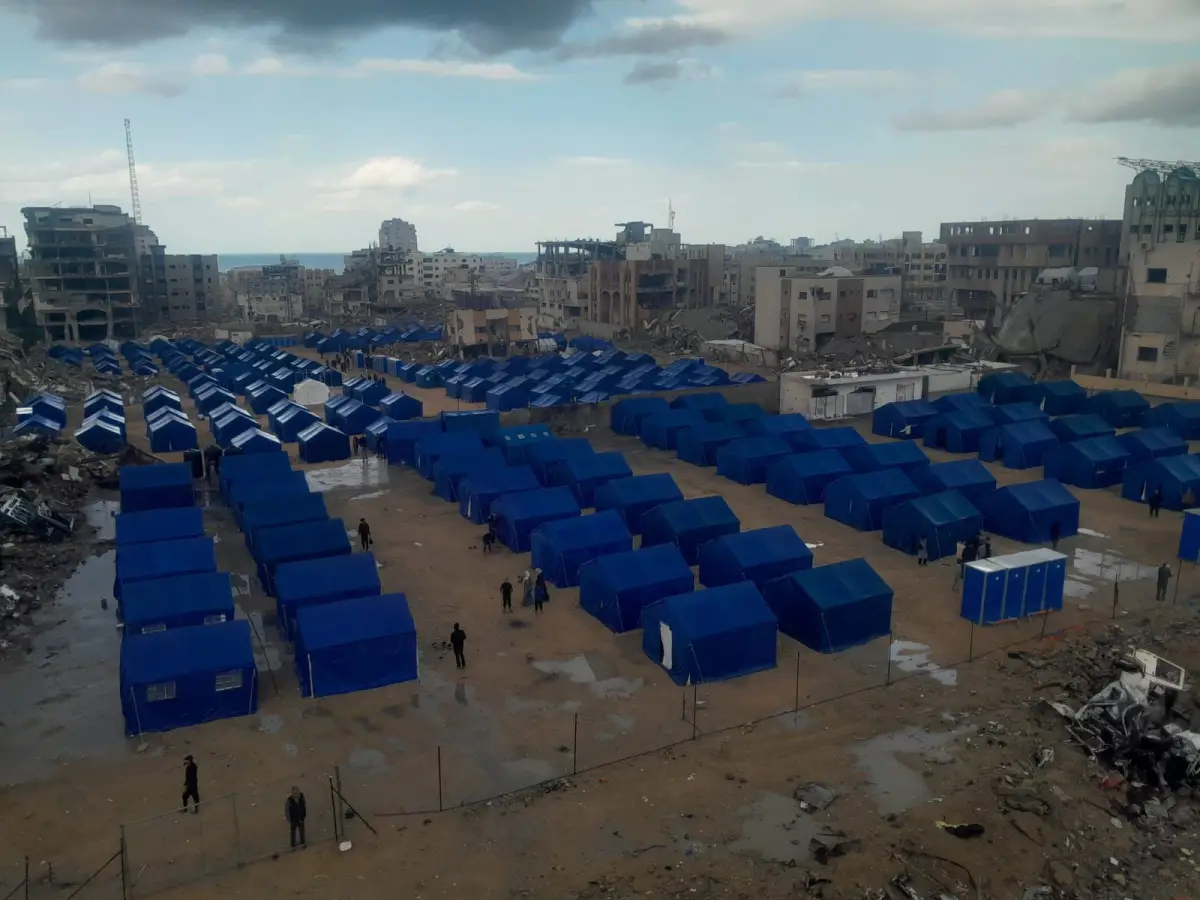
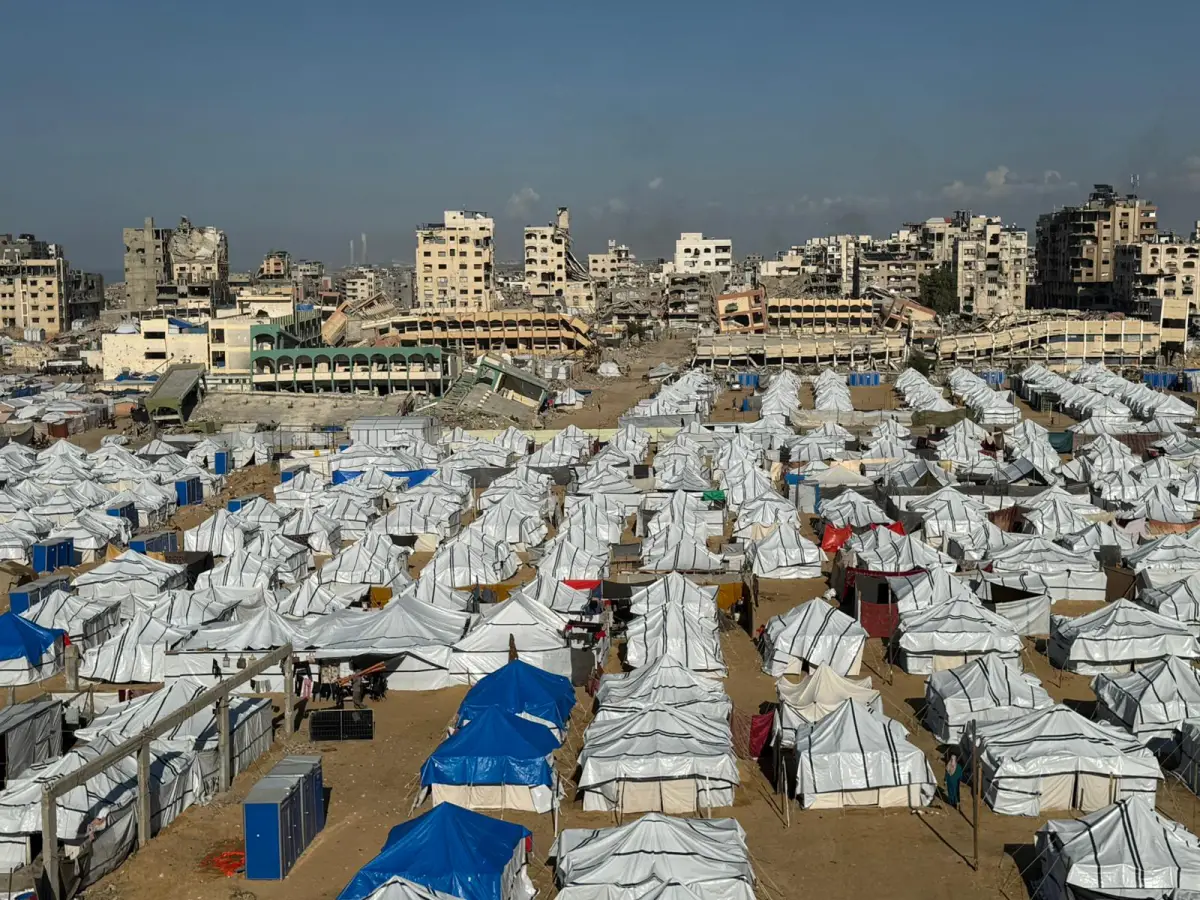
Storms in the Gaza Strip pose serious risks to cam residents due to fragile tents, limited resources, and insufficient infrastructure to handle heavy rain and strong winds. To protect lives and minimize damage, the following safety measures should be strictly followed during storm conditions:
Tents must be firmly anchored with deep pegs and supported with sandbags or stones. Ropes should be tightened, and tarpaulins or plastic layers regularly checked for tears or weak points that may allow water to enter.
Keep essential items and food elevated using wooden or cardboard layers to prevent water damage. Add an extra plastic layer on the tent roof and ensure a slope for proper drainage. Make sure surrounding drainage channels are clear and unobstructed.
Use coal or other open flames with proper ventilation to avoid suffocation. Keep heating sources away from fabrics and tarps to prevent fires. Never leave heaters burning unattended, especially while sleeping.
Maintain a ready-to-go emergency bag containing a flashlight, spare batteries, dry clothing, extra blankets, essential medicines, and important documents for quick evacuation if needed.
Keep the contact numbers of local emergency and relief organizations handy. Report any danger immediately, such as collapsed tents or water intrusion, to ensure timely support before conditions worsen.
Stay away from weak poles, unstable metal sheets, tall trees, and unsecured heavy objects that may fall or be displaced during strong winds.
Change wet clothing promptly, ventilate tents after rain, and dry blankets and bedding to prevent mold. Maintaining personal hygiene helps reduce the spread of common winter illnesses.
In conclusion, following these preventive measures provides the first line of defense against storms. Despite ongoing challenges, these steps help safeguard families until safer shelters and humanitarian assistance can be provided.